

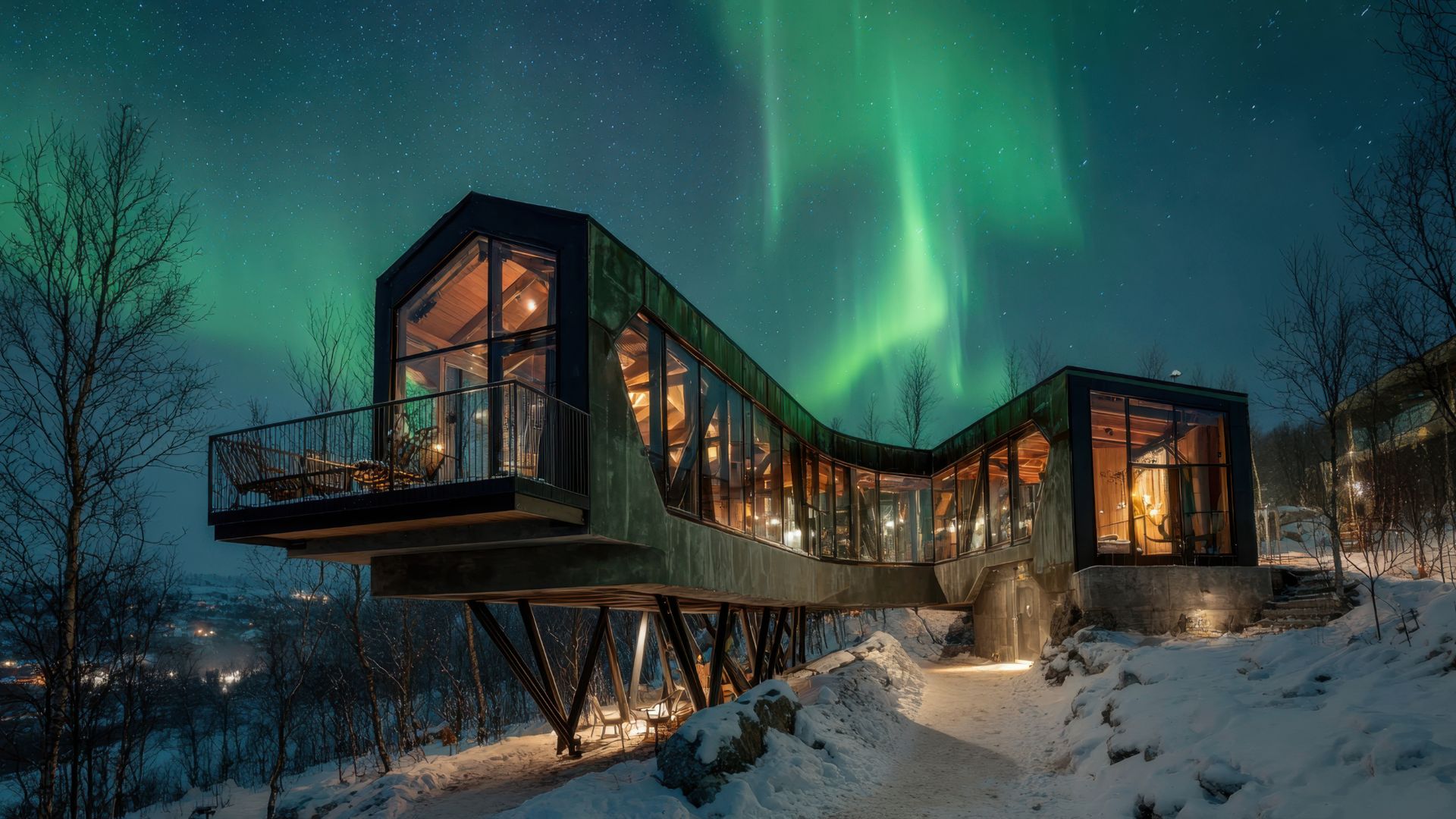
There’s something magical about standing beneath the night sky as green curtains swirl and dance overhead—nature’s own light show. But what causes this spectacle, how do you chase it, and what’s the real experience like? Let’s dive into the aurora world!
❓ Why Do the Northern Lights Happen?
The aurora borealis occurs when charged particles from the Sun—the solar wind—collide with Earth’s magnetic field and atmosphere These particles excite oxygen (which glows green, and rarely red) and nitrogen (which can appear pink, blue, or purple) at altitudes ranging from 60 to 300 km above Earth . So what you see depends on where and how intensely these particles collide!
🧙 Myths, Legends & FUN Facts
- Inuit folklore imagined auroras as animal spirits—seals or deer—dancing in the skies .
- Norse and Roman legends tied the lights to gods and battles, hence the term “Aurora Borealis” after Aurora (the dawn) and Boreas (the north wind)
- Spot pink or purple? That means nitrogen is joining the show—a rare treat during strong solar activity
⏰ Best Time & Place to Hunt the Lights
- Seasons: Late September to early April in the Northern Hemisphere—optimal darkness and strong solar activity.
- Timing: Between 10 pm–2 am local time, when the skies are darkest and geomagnetic activity peaks.
- Locations: Arctic Circle hotspots include Tromsø (Norway), Abisko (Sweden), Rovaniemi–Kilpisjärvi (Finland), and Iceland. Light pollution nearly kills the show—so get away from city glare! .
📸 Camera vs Reality: The Big Difference
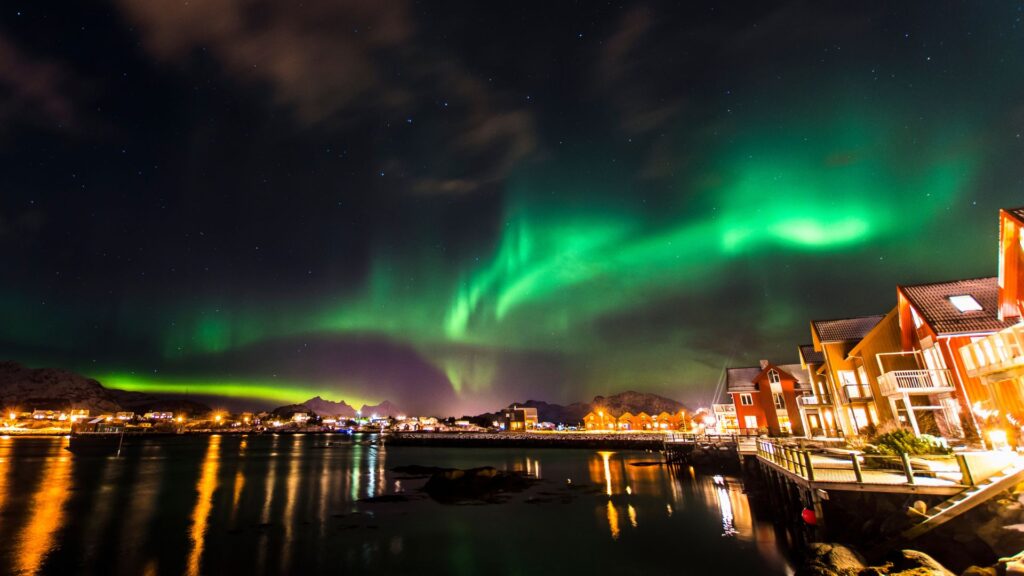
Here’s the caveat: your camera can capture colors far beyond what your eyes perceive in real-time . Human eyes work in black and white at night (rods only)—so subtle greens often look greyish in person. Accessories like long exposures enhance the show. That’s why colorful photos sometimes feel unreal. Still, seeing even a ghostly shimmer in real life is pure magic!
🎯 Tips to Boost Your Chances
- Track the KP index—a measure of geomagnetic activity. KP 4+ gives green, KP 6+ brings red and pink.
- Avoid too much moonlight, which dims aurora visibility.
- Stay multiple nights—weather changes fast in the Arctic, and patience pays.
- Book local guided tours with warm gear, expert drivers, and Aurora forecasts.
- Bring a tripod and remote shutter—long exposure is key to great shots.
🗣️ My 5-Minute Northern Lights Glimpse
I went aurora hunting from Rovaniemi on a guided night tour that took us all the way to the Swedish border. We were lucky—there was a brief 5-minute burst where I saw the Northern Lights with my own eyes. A soft, green glow danced quietly across the sky before fading. After that, the lights were only visible through the camera lens. That moment was short but unforgettable. It also made one thing clear—what the camera captures and what the eye sees can be surprisingly different, but both are magical in their own way.
🌌 Pink Auroras: Myth or Reality?
Yes—pink auroras do exist, but they’re rare. They show up as a lower fringe beneath the green, thanks to nitrogen at around 100 km altitude. Most hunters only glimpse green. If you see pink, consider yourself extremely lucky!
Why Alaska, Iceland & Norway Are Top Northern Lights Destinations:
1. Location in the Auroral Oval
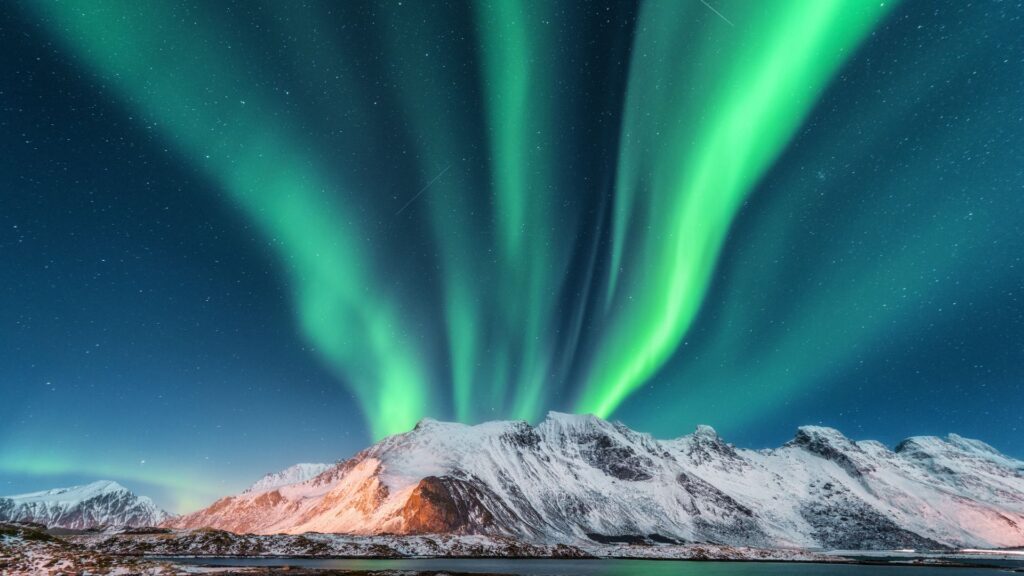
The auroral oval is a ring-shaped zone around the Earth’s magnetic poles where auroras are most frequent. These three regions lie directly under or very close to this oval, giving them a natural advantage.
- Alaska (especially Fairbanks and beyond): Offers dark skies, minimal light pollution, and stable inland weather in winter.
- Iceland: Easily accessible from Europe and the U.S., Iceland combines stunning natural landscapes with high aurora activity.
- Norway (especially Tromsø and the Lofoten Islands): Located right in the heart of the auroral zone, it has frequent sightings and great winter tourism infrastructure.
2. Long, Dark Winters
All three have long nights from September to March, providing more hours of darkness—crucial for aurora viewing.
3. Better Infrastructure for Tourists
They offer a wide range of guided aurora tours, glass igloos, heated observatories, and local knowledge that boosts your chances of a successful sighting.
Of course, other countries like Sweden, Finland, Canada, and Greenland also offer amazing aurora experiences, but Alaska, Iceland, and Norway tend to rank highest for reliability, accessibility, and overall aurora-hunting experience.
🔭 Southern Lights: The Aurora Australis
The aurora has a sibling in the Southern Hemisphere—Aurora Australis or Southern Lights. You’ll find them over Tasmania (Australia), Stewart Island (NZ), Ushuaia (Argentina), and Antarctica
- Best time: March–September (Southern Hemisphere winter).
- Legends: Among Indigenous Australians, it’s seen as fires or ancestral spirits in the sky .
- Why chase them? They’re equally stunning but far more remote—making your hunt a true adventure!
Final Thoughts
Aurora hunting is a mesmerizing mix of science, myth, patience—and pure luck. It’s about standing in cold silence, camera in hand, willing the skies to open. Even a brief, faint shimmer can send a thrill through you, and seeing it captured in full color later? A memory you’ll never forget.
Whether you’re under the Northern or Southern Lights, remember: show up prepared, stay flexible, and embrace whatever magic the sky offers. And of course, whether you glimpse a green ribbon, pink fringe, or ghostly glow, you’re witness to something extraordinary.

